Repair soon
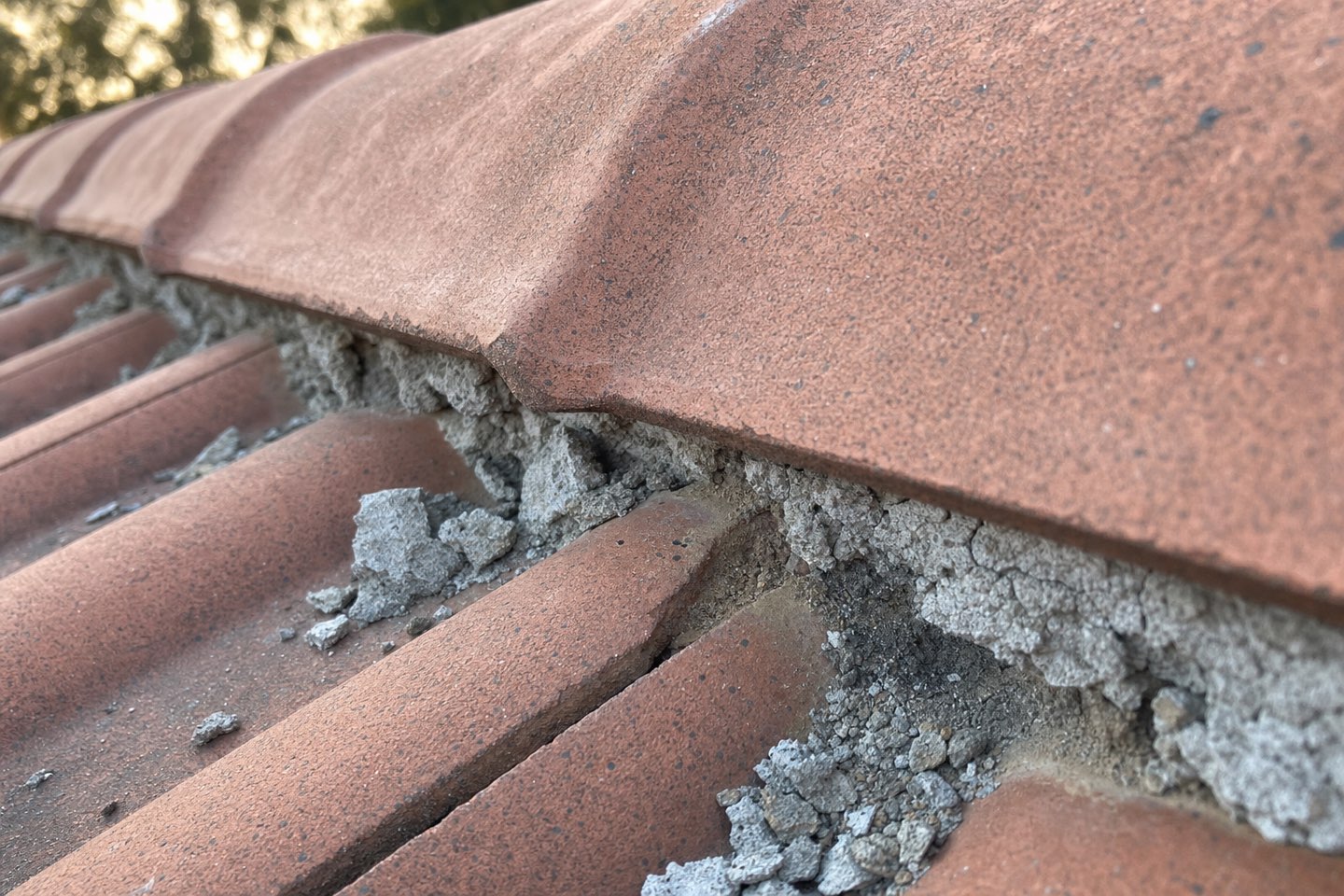
Fretting ridge mortar
The bedding under these caps is powdering — the first big westerly starts lifting them.
Rebed & repoint ridge capping $1,500–$4,000
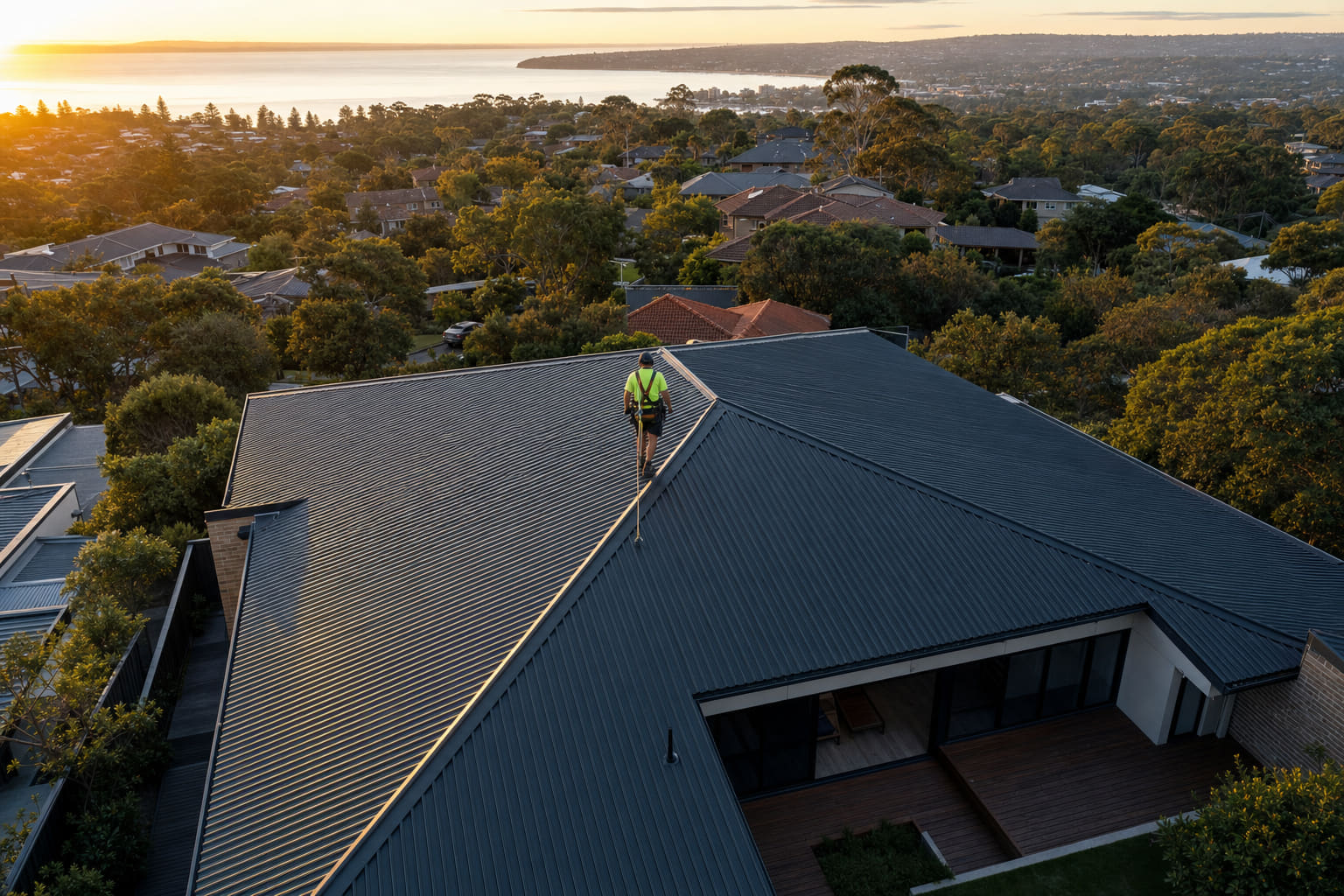
Kestrel has looked after southern Tasmania's roofs for 27 years — free drone inspections, a written photo report the same day, honest repair-first quotes, and every job backed for ten years.
Restore — don't replace
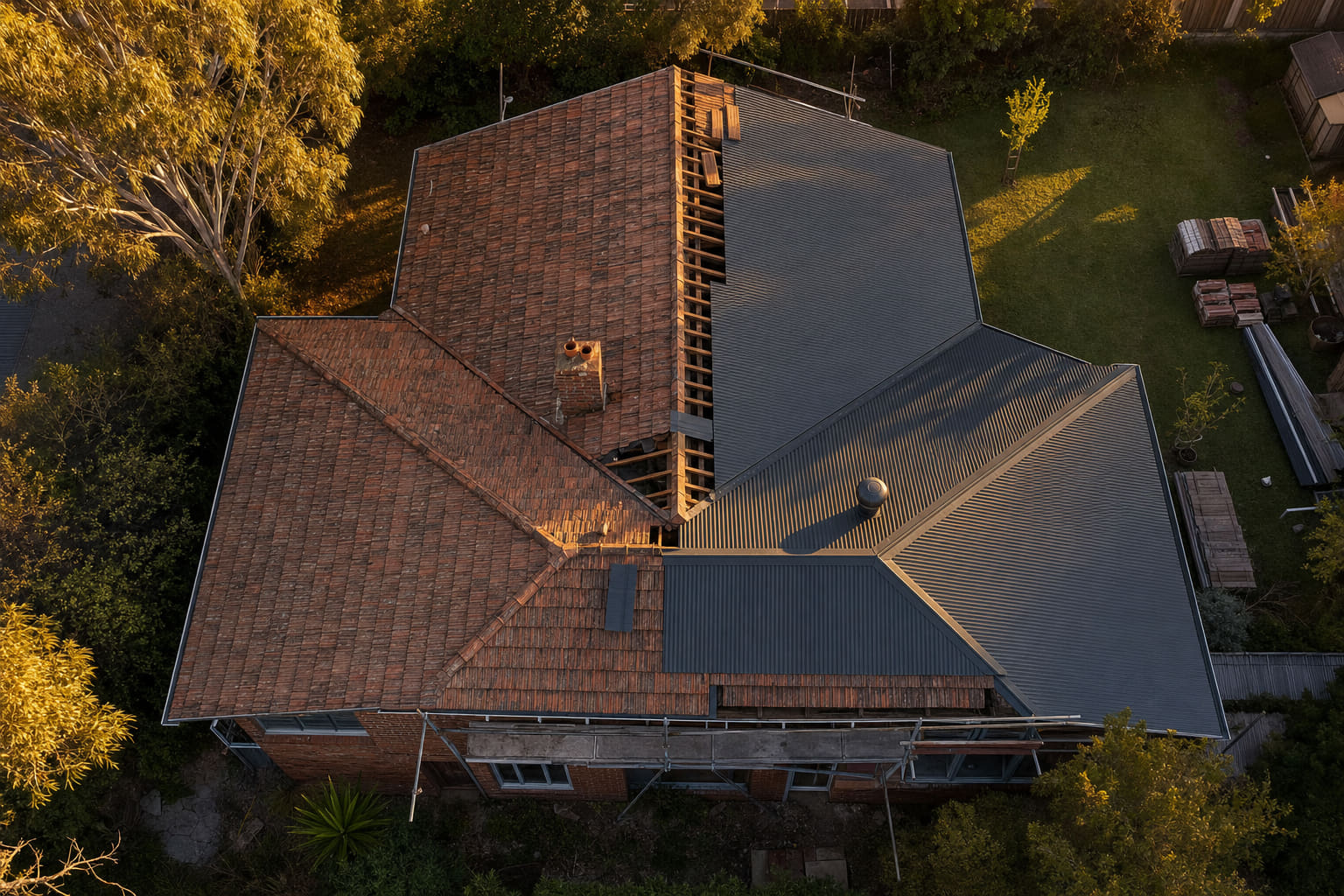
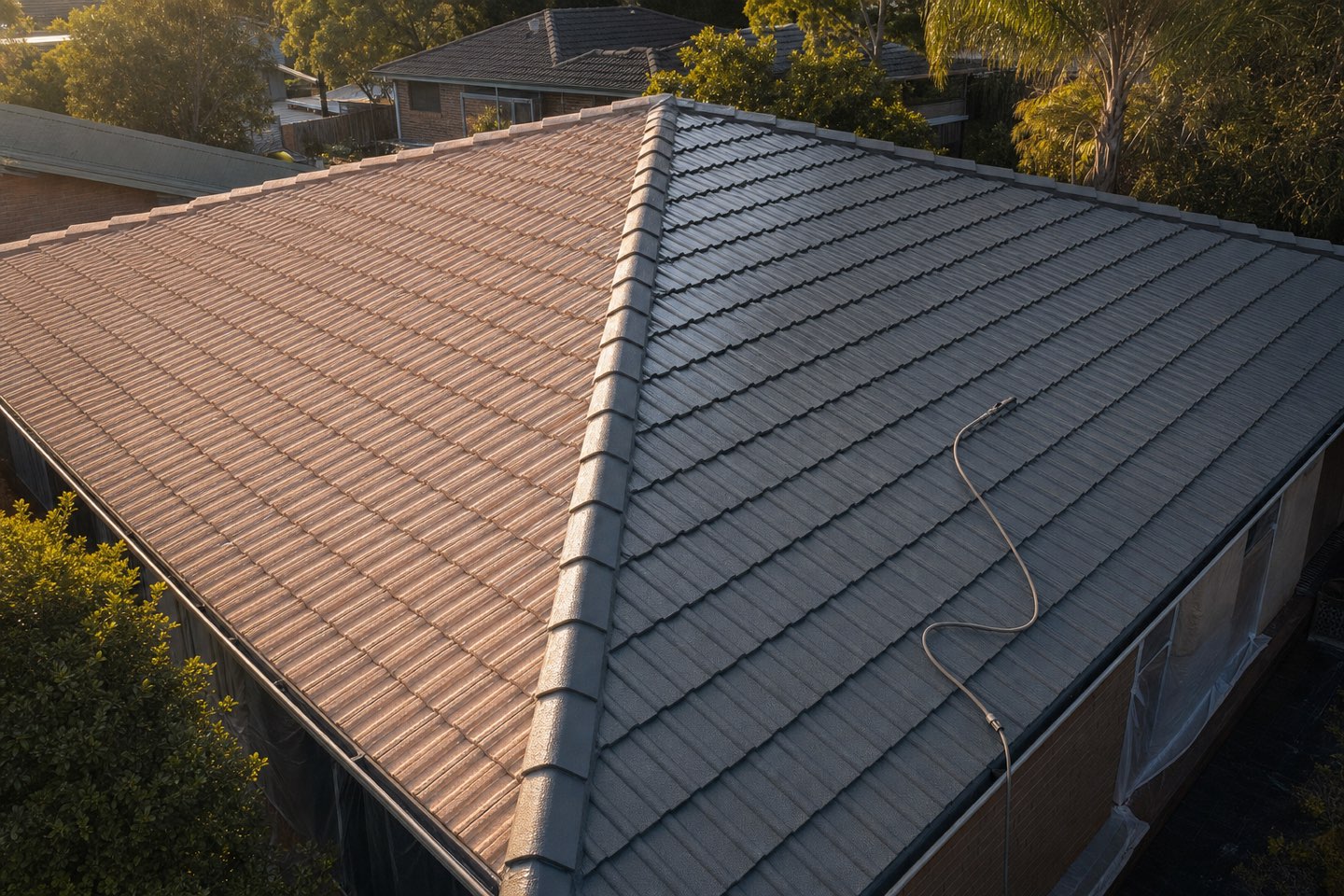
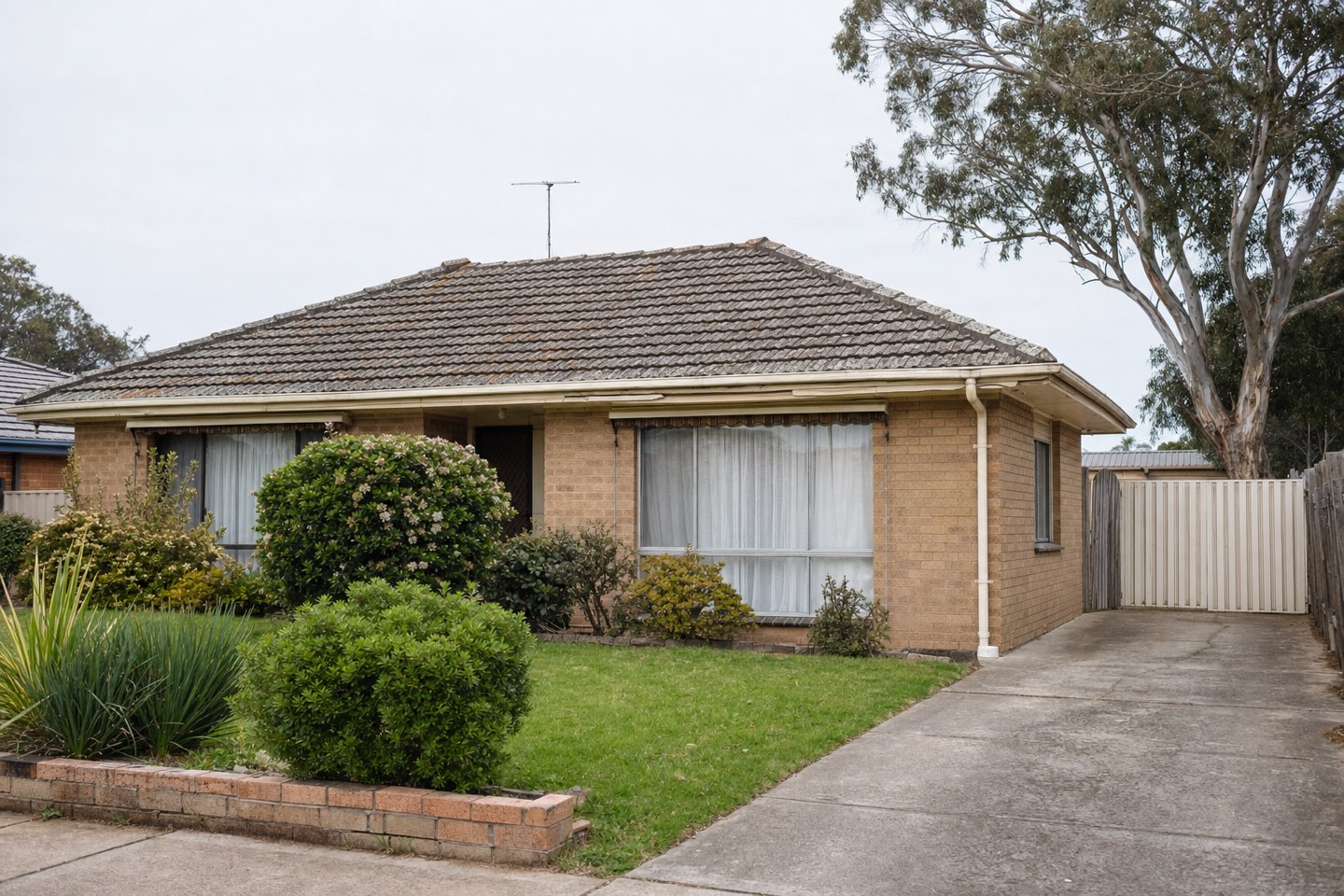
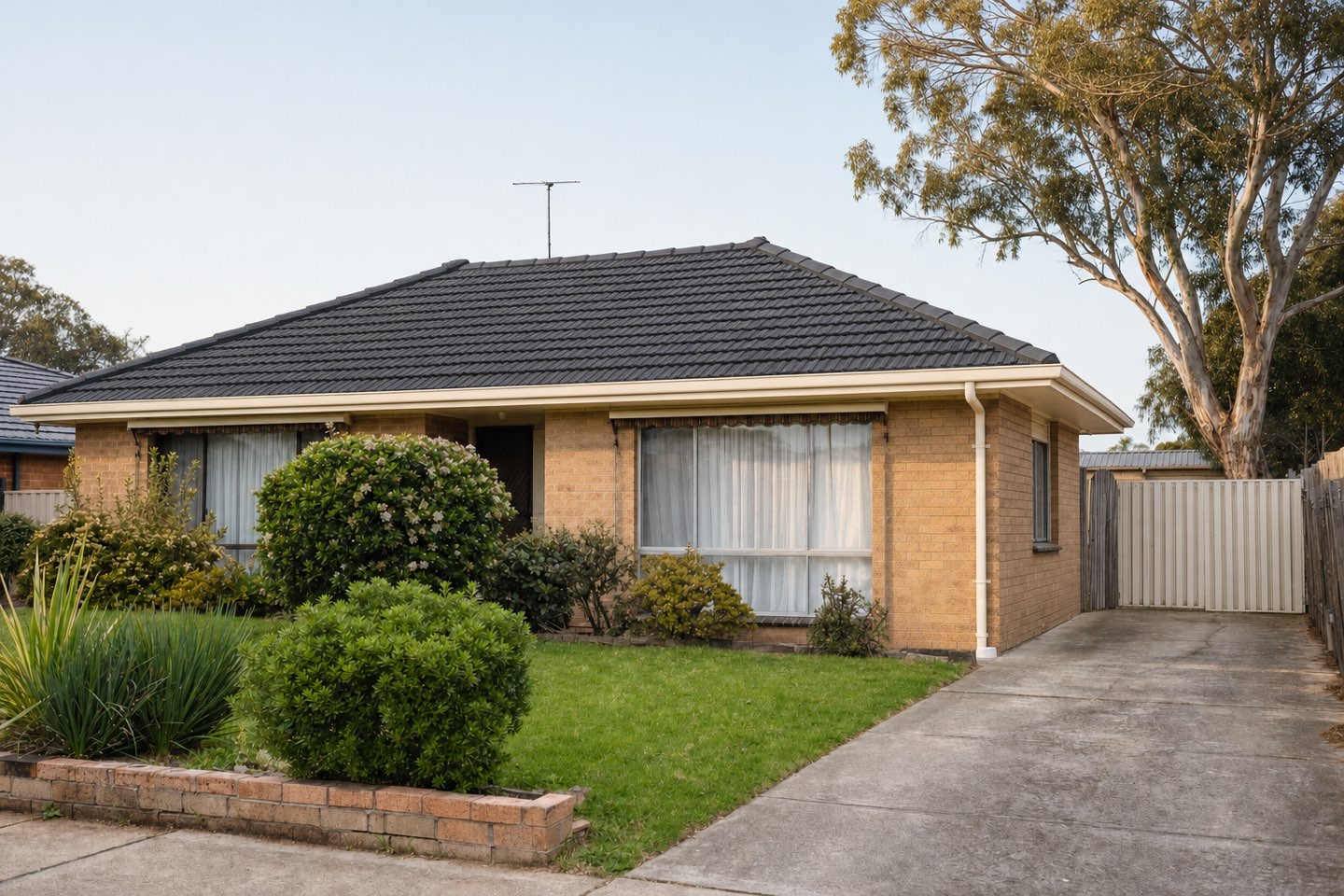
Two other quotes said replace it. The drone said the tiles were structurally sound — so we restored the roof they already owned, for about a third of the price. Drag the line. This is the same roof, three days apart.
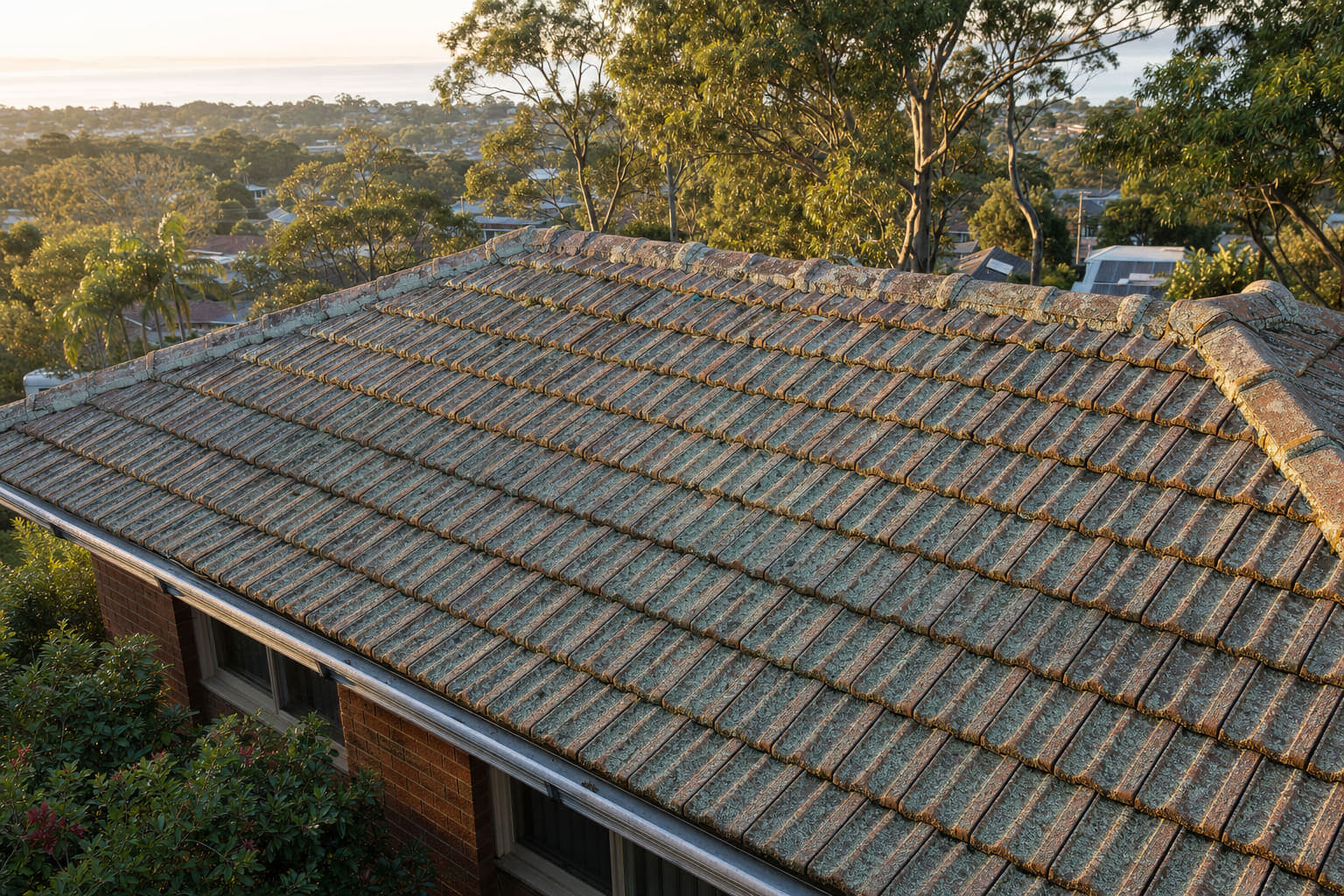
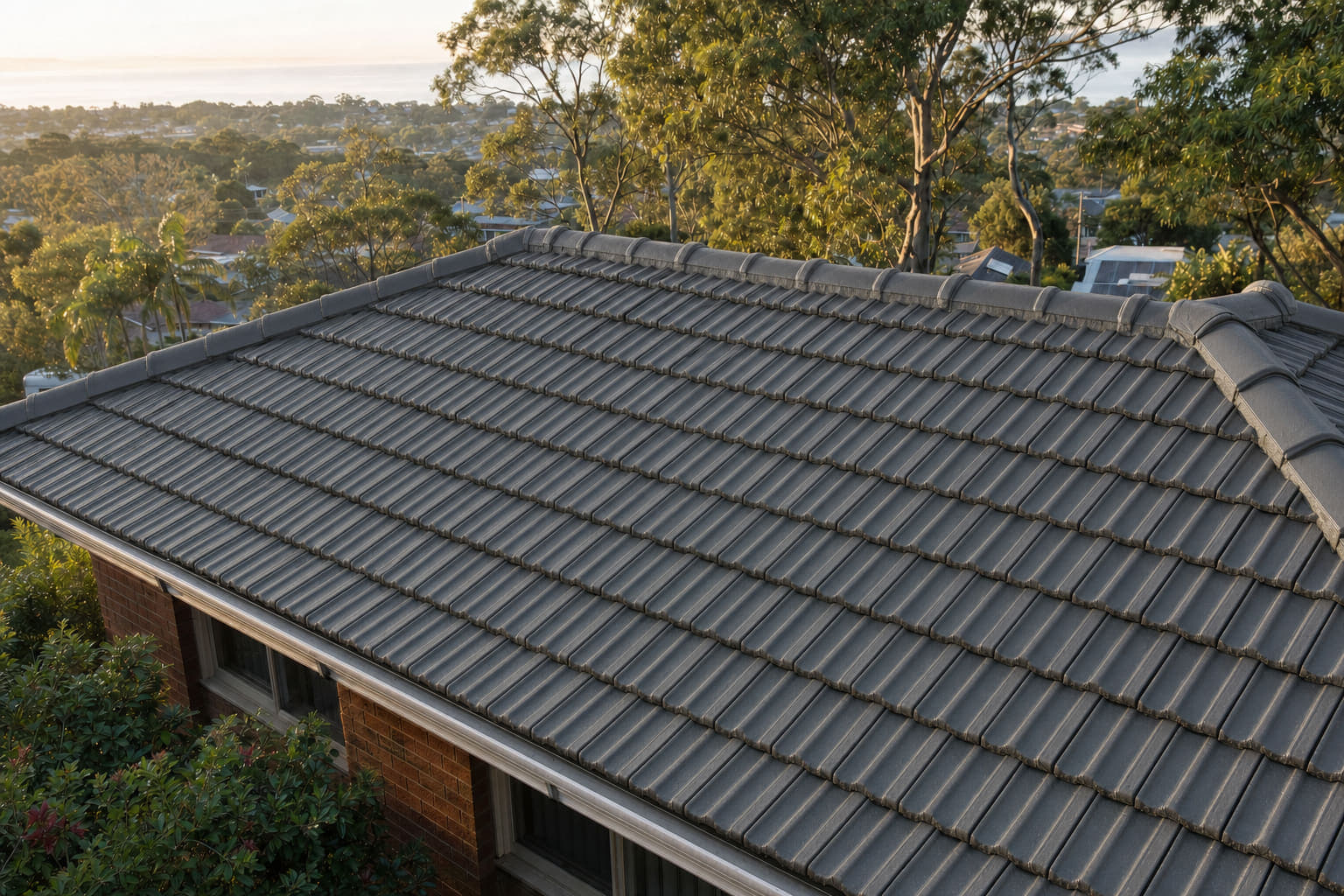
After Cleaned, rebedded, two-coat membrane
Before Lichen, chalked tiles, fretting caps
Our call on this roof: restore. three days on site, $3,500–$8,000 — and the same ten-year written warranty as a new roof. A full re-roof would have been $15,000–$35,000, and it wasn't needed.
Find out which one yours needs — freeSample job — 18 Sample Rd, Blackmans Bay. Your roof gets its own call, in writing, the same day we fly it.
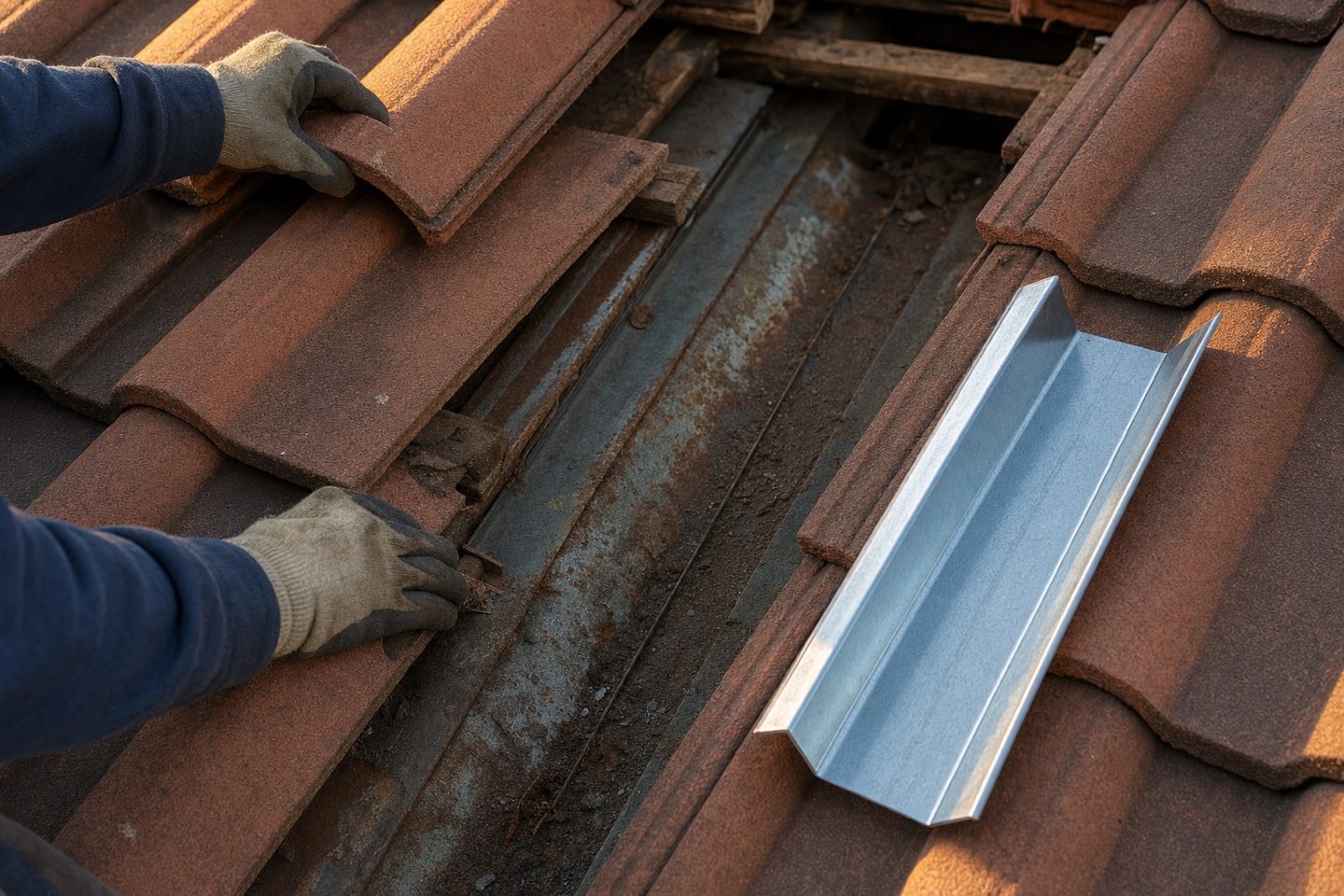
After the gale
A roof leak shows up two rooms from where it starts. We chase it uphill — valley irons, flashings, cracked bedding, slipped tiles — and fix the cause, not the stain. Most leak and valley repairs land between $500 and $2,500, priced in writing before a boot touches the ladder.
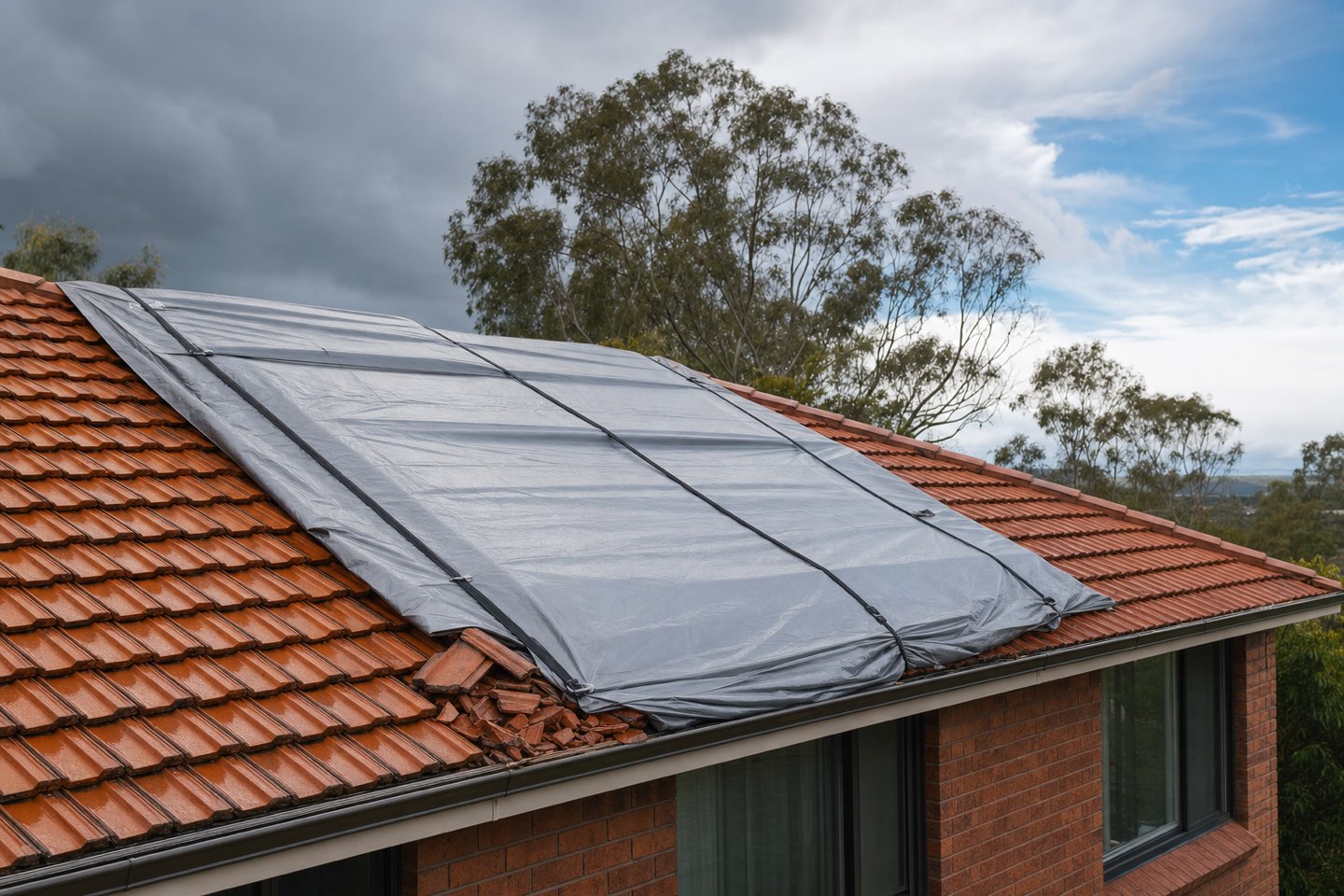
After the hail
Tarped and made safe within 24 hours, then documented properly: every broken tile and bent sheet photographed from the drone, in the format your insurer's assessor actually accepts. We've walked hundreds of Tasmanian claims through — you deal with the weather, we'll deal with the assessor.
After 20 years of sun
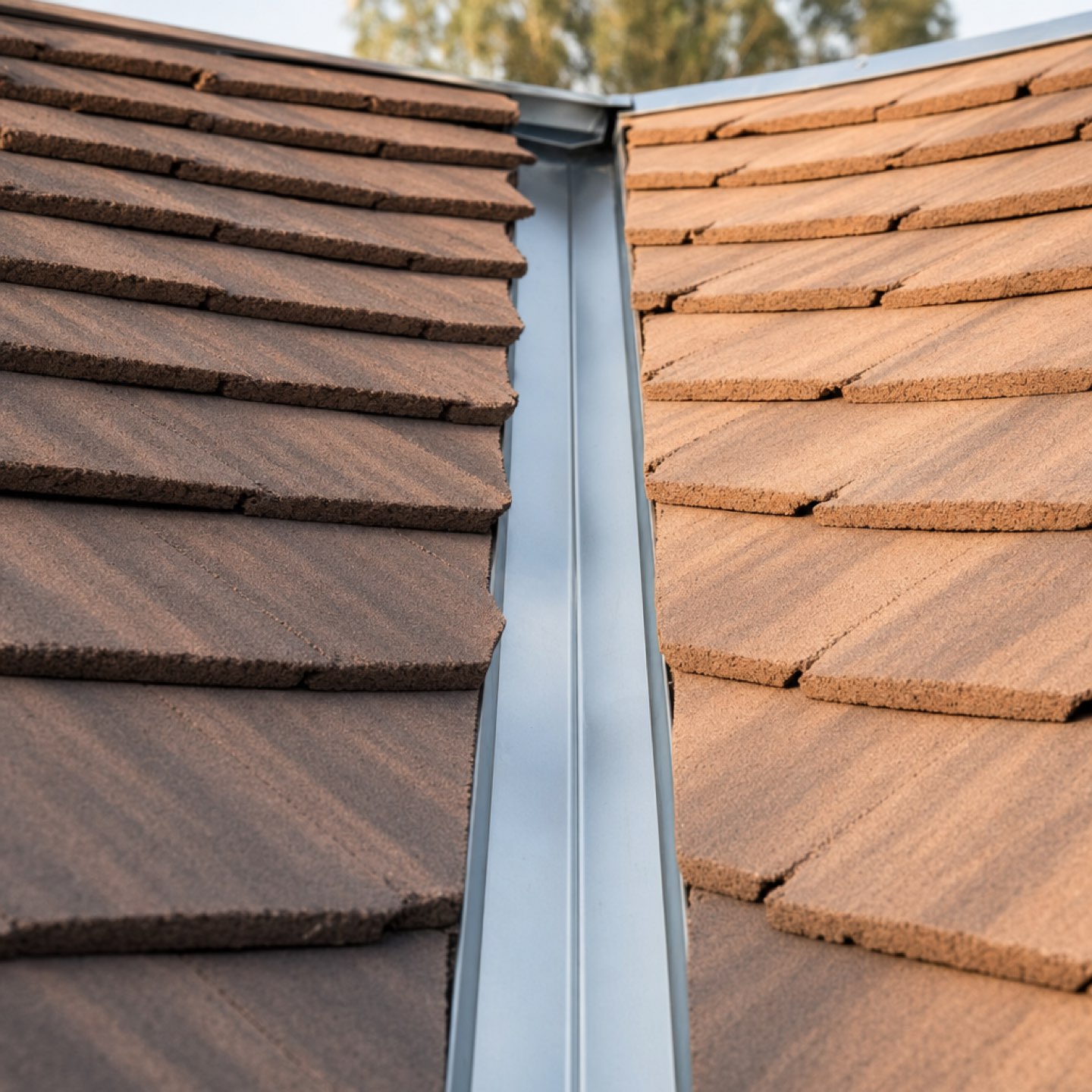
If the tiles are sound, you don't need a new roof — you need the one you own brought back: high-pressure clean, rebed and repoint the ridge, then a two-coat membrane in the colour you actually want. Most restorations run $3,500–$8,000 and carry the same 10-year written warranty as a re-roof.
After the third patch-up
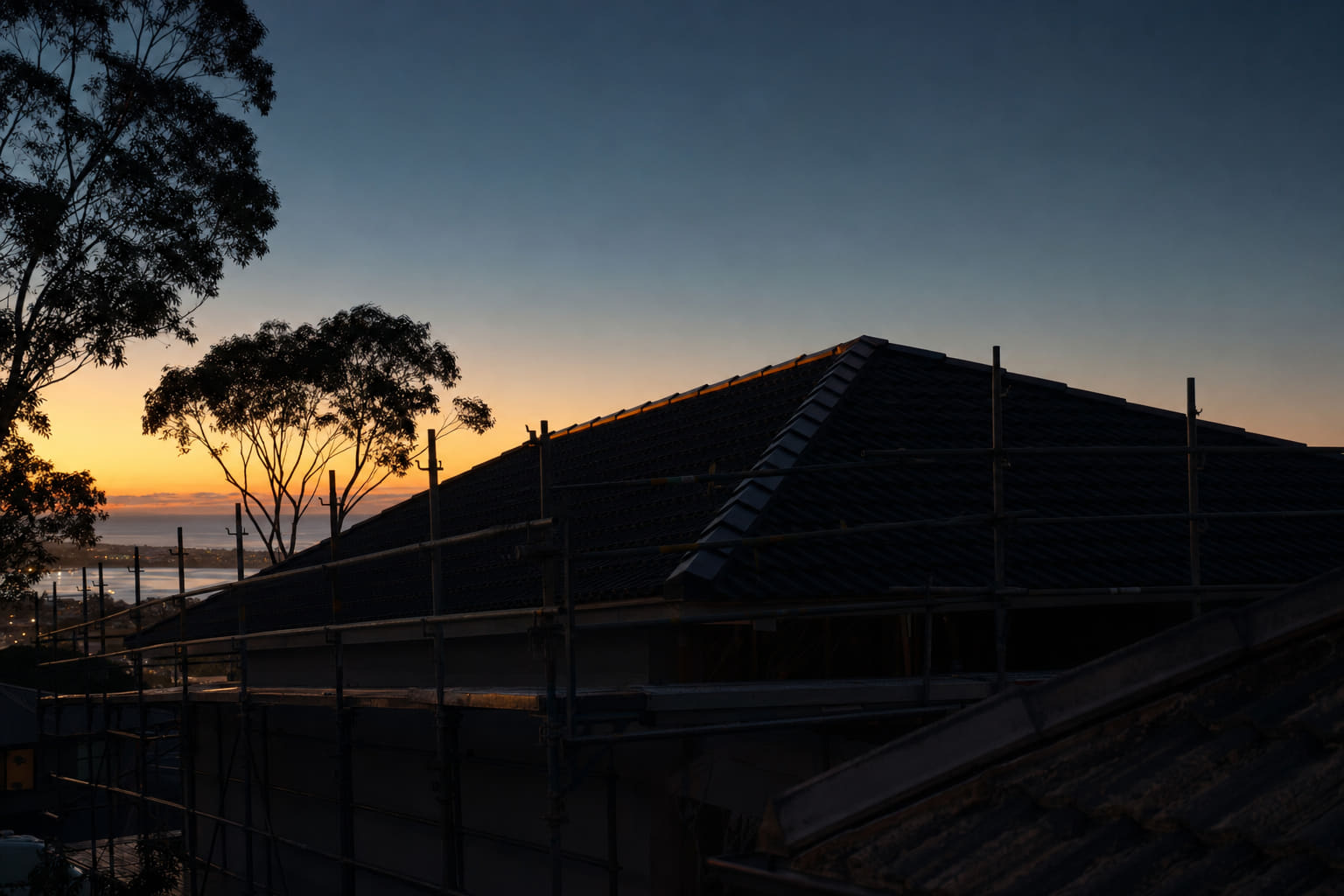
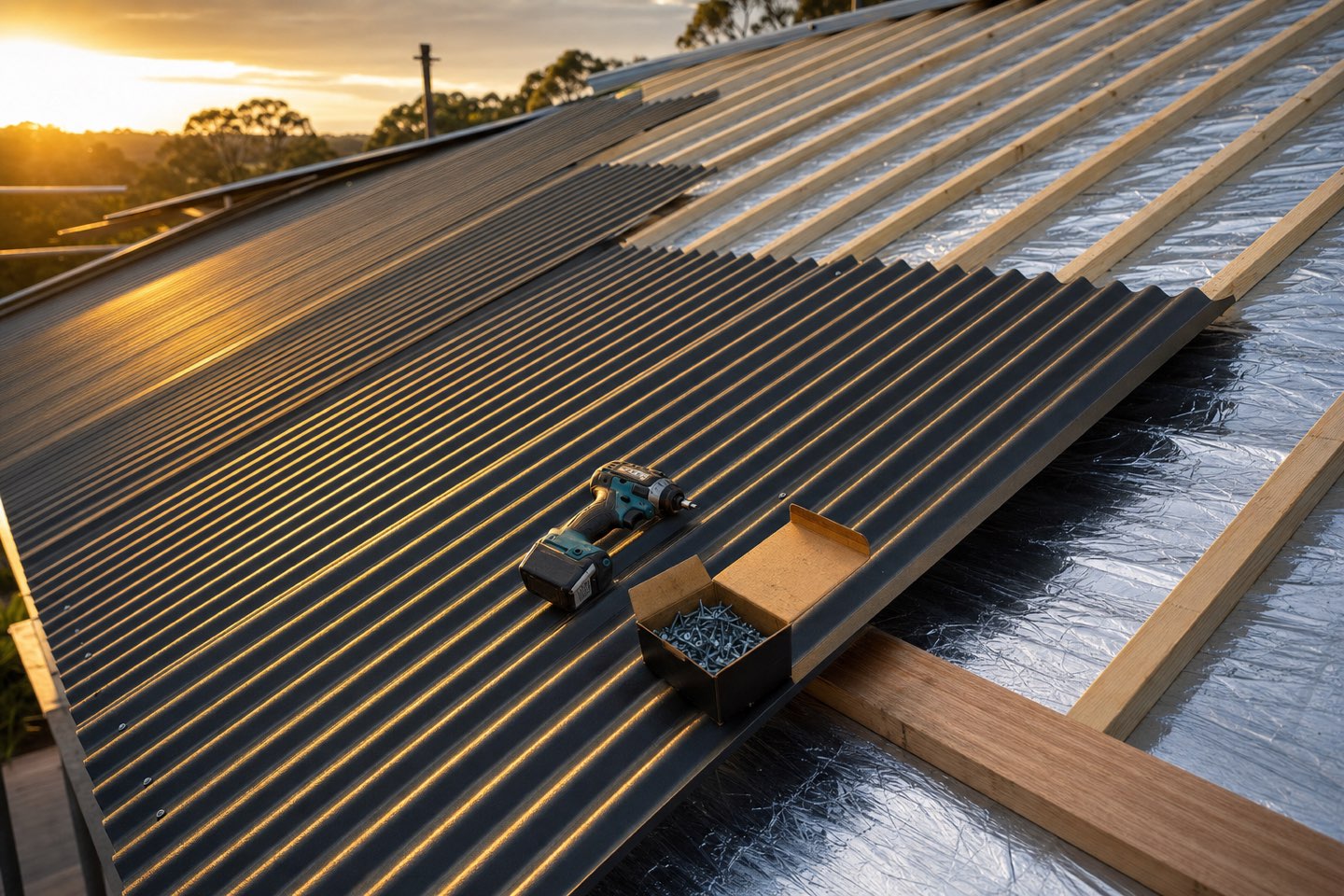
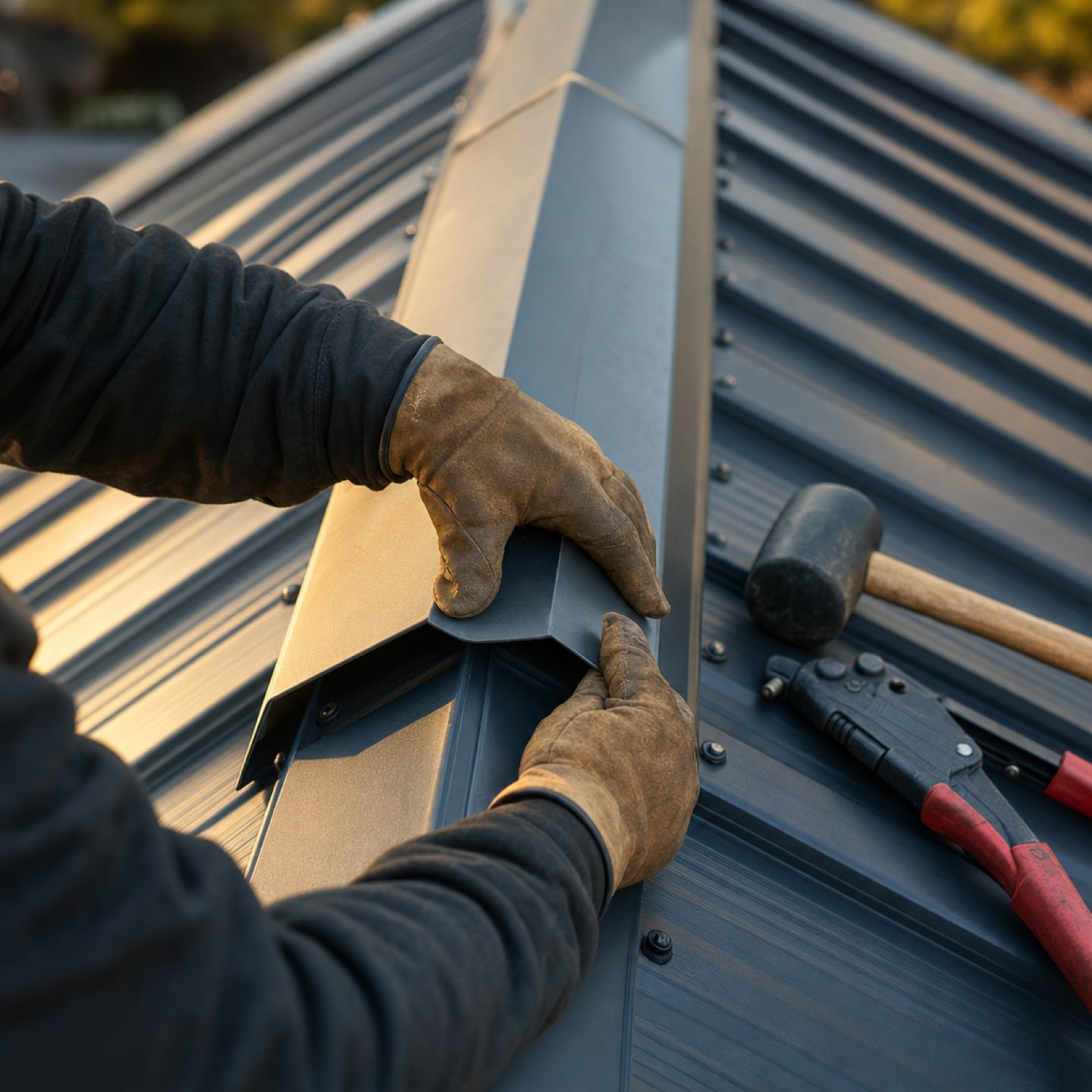
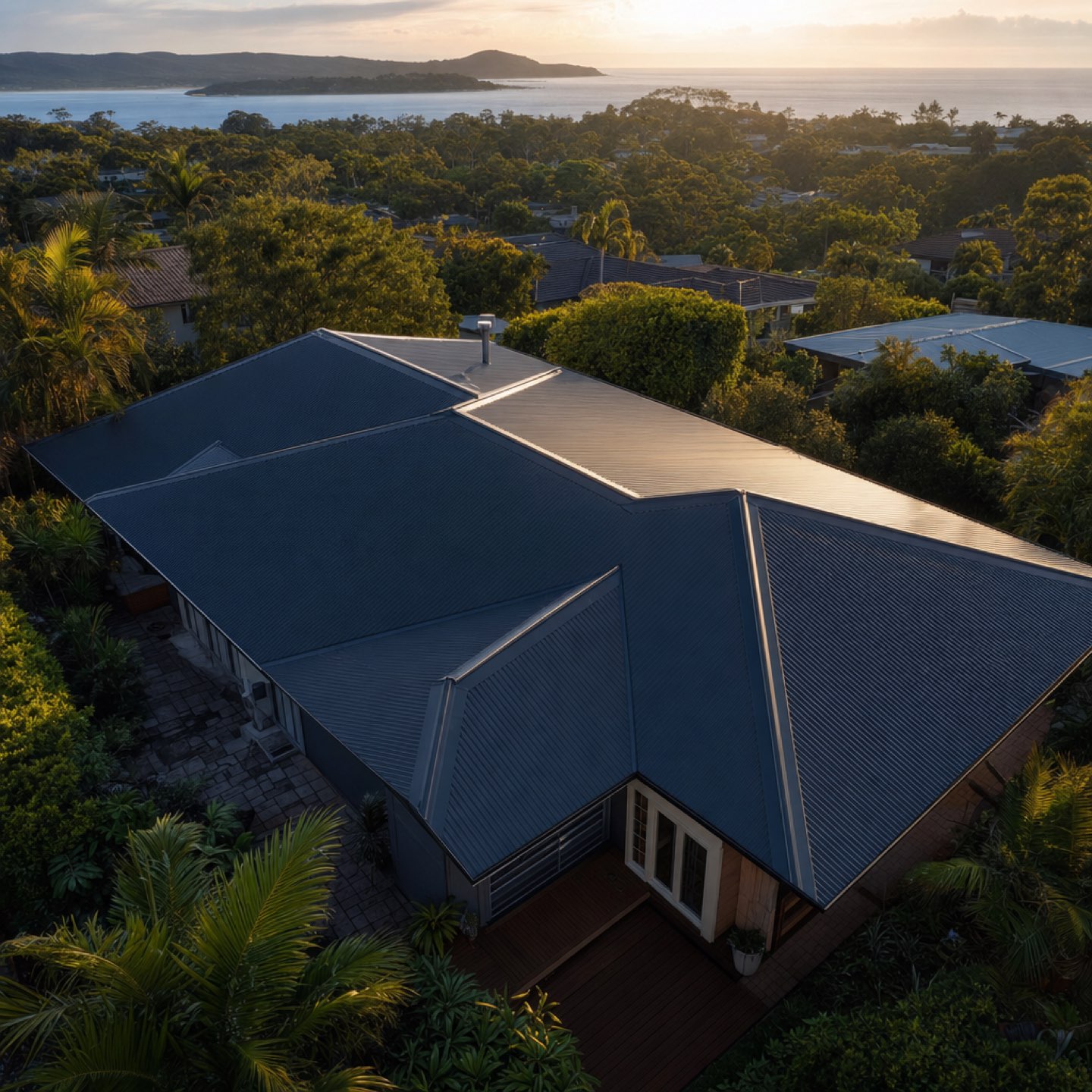
Some roofs are past saving — rusted tin, tiles gone brittle, a frame that moves. That's when we say so, in writing, and price the conversion: new battens, sarking, insulation blanket and Colorbond steel, $15,000–$35,000 depending on the roof. We bring the real swatch card to every inspection — Monument, Woodland Grey, Surfmist — because screen colours lie. And the ridge capping goes on last. Always.
No ladder against your gutters, no stranger walking your tiles, no 'while we're up here'. A drone, a written report, and a price you can hold us to.
Twenty minutes, no ladder on your gutters, no callout fee, no one walking your roof to 'have a look'. You can watch the screen with us — most people do.
Same day: every defect photographed, numbered and priced — exactly like the sample pages below. No report has ever been chased by a phone call. Yours won’t be either.
Repair AND replace, side by side, with our call in writing. If repair is the right answer, that's the quote you get — we'd rather keep your roof honest than sell you a new one.
What lands in your inbox
Three pages of this, on average — no jargon, no scare language, and a price beside every line so you can decide what's worth doing now and what can wait a winter.
The bedding under these caps is powdering — the first big westerly starts lifting them.
Rebed & repoint ridge capping $1,500–$4,000
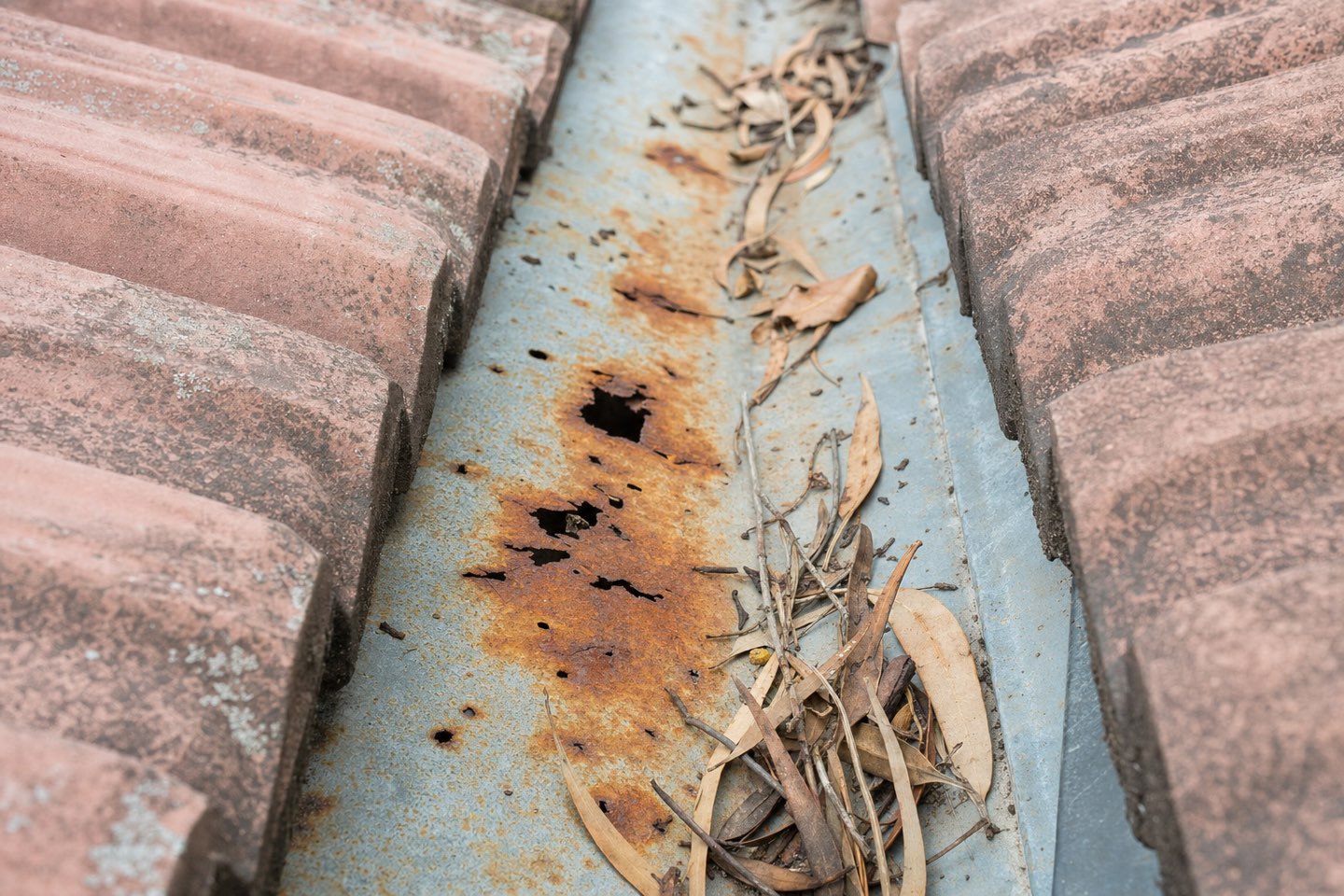
Rust has pinholed the channel — water is already tracking under the sarking line.
Valley iron replacement $800–$2,500
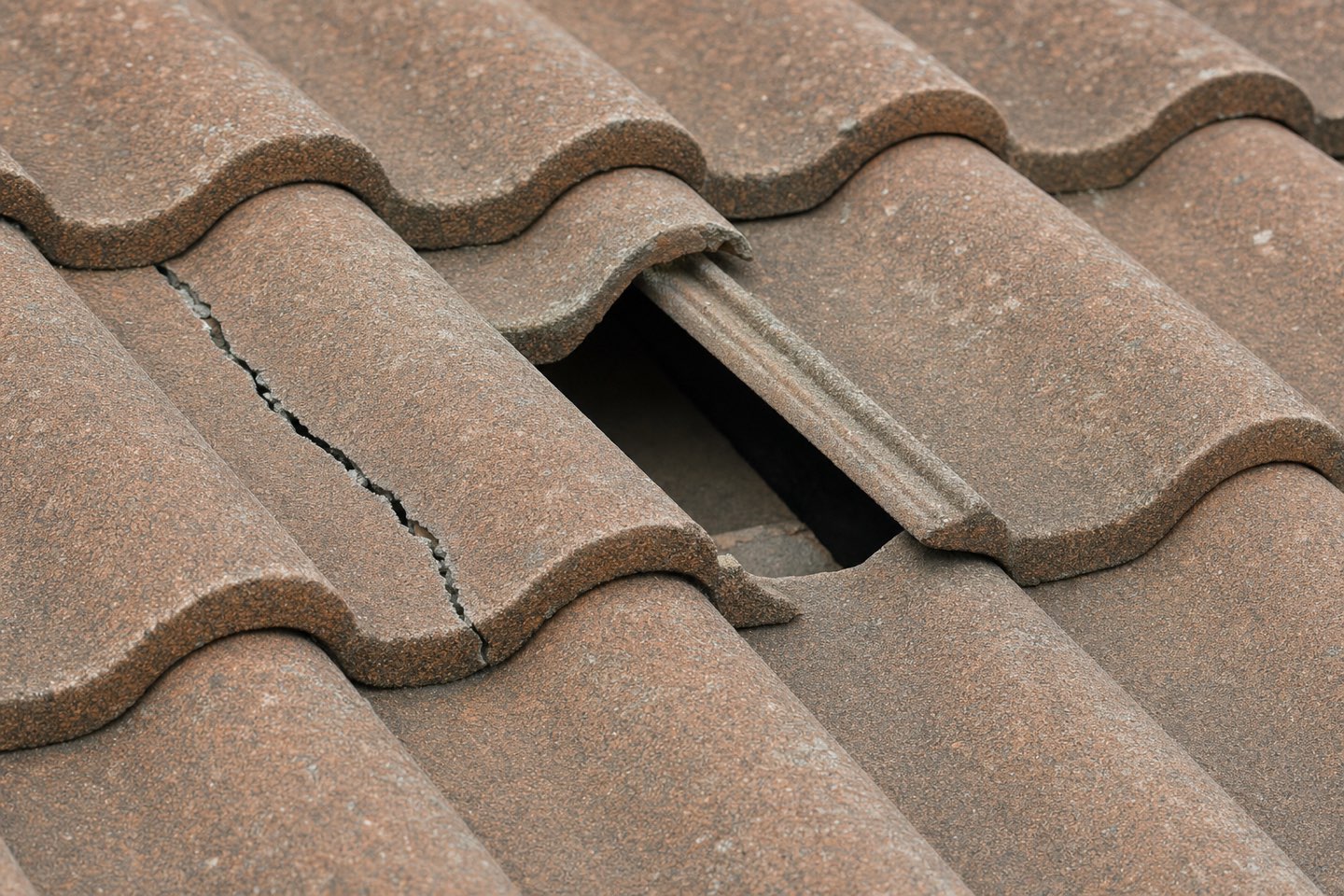
An entry point for wind-driven rain — worth watching, not worth panicking over.
Tile swap during next service $300–$800
Sample extract — 18 Sample Rd, Blackmans Bay. Yours will say whatever your roof says.
Before the drone · after the crew
1,900+ roofs restored or replaced — and over 2,300 written reports where our call was "don't spend the money yet."
The reviews mention the drone report and the quote that said "repair it" more than the roofing. That's the point.
“Two other companies quoted a full re-roof. Kestrel flew the drone, showed us three photos, and fixed it for $1,900. That report is why we’ll never call anyone else.”
“The report arrived the same afternoon with every photo numbered and priced. I forwarded it straight to our insurer — the assessor approved the claim off Kestrel’s photos alone.”
“Restoration looked like a stalling tactic to me until I saw the drone footage of my own ridge caps. Half the price of the re-roof quote we had, and the roof looks brand new.”
“They found the leak in twenty minutes — a valley iron two rooms from the stain on our ceiling. Fixed that week, price as written, not a cent more.”
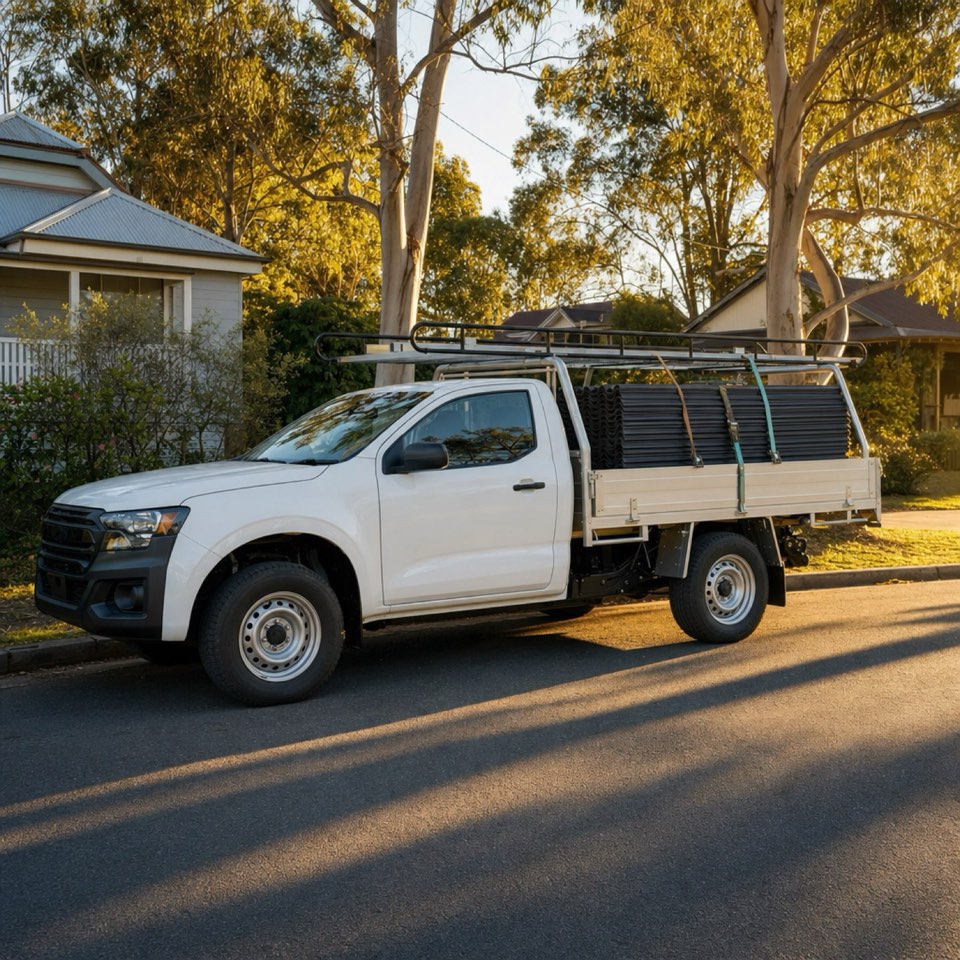
“The same two blokes who quoted the job did the job. Gutters cleaned, tarps down, and the offcuts left with them. You can tell a company by its ute.”
“Told us straight our tin was past saving, priced the Colorbond conversion both ways against another decade of patches, and let us decide. No pressure, all paperwork. Roof’s magnificent.”
Based in Kingston, flying from Glenorchy to Snug. If your suburb's neighbours are here, we've probably photographed their roofs.
More than a bloke on a ladder, safely: every ridge cap, valley, flashing and tile face in high resolution, plus the spots no one can reach — behind chimneys, over skylights, the far side of a steep pitch. Every defect is photographed and numbered into your report, like the sample pages further up this page.
Yes — genuinely, whether or not you book work. It costs us twenty minutes and it wins us the quotes worth winning. You get the full written photo report either way; there's no watermarked teaser version.
By the evidence, priced both ways. If the tiles are structurally sound, restoration buys you ten-plus years for roughly a third of a re-roof, and that's what we'll recommend — in writing. If the roof is past saving, we'll show you the photos that prove it. Either way you see both numbers side by side.
We can't lodge it for you, but we do the part that makes claims succeed: a same-day make-safe, then a drone photo report in the format assessors accept, an itemised repair scope, and we'll walk the assessor over the evidence if they want to talk detail. Hundreds of Tasmanian storm claims have settled on our reports.
Same day, nearly always — the drone lands, we annotate the photos over lunch, and the PDF is in your inbox before dinner. Storm-season backlogs can push it to the next morning, and we'll tell you that before we fly, not after.
Start with the flight
Tell us where you are and what's worrying you. We'll fly the drone this week and you'll have the written report the same day — whatever it says.